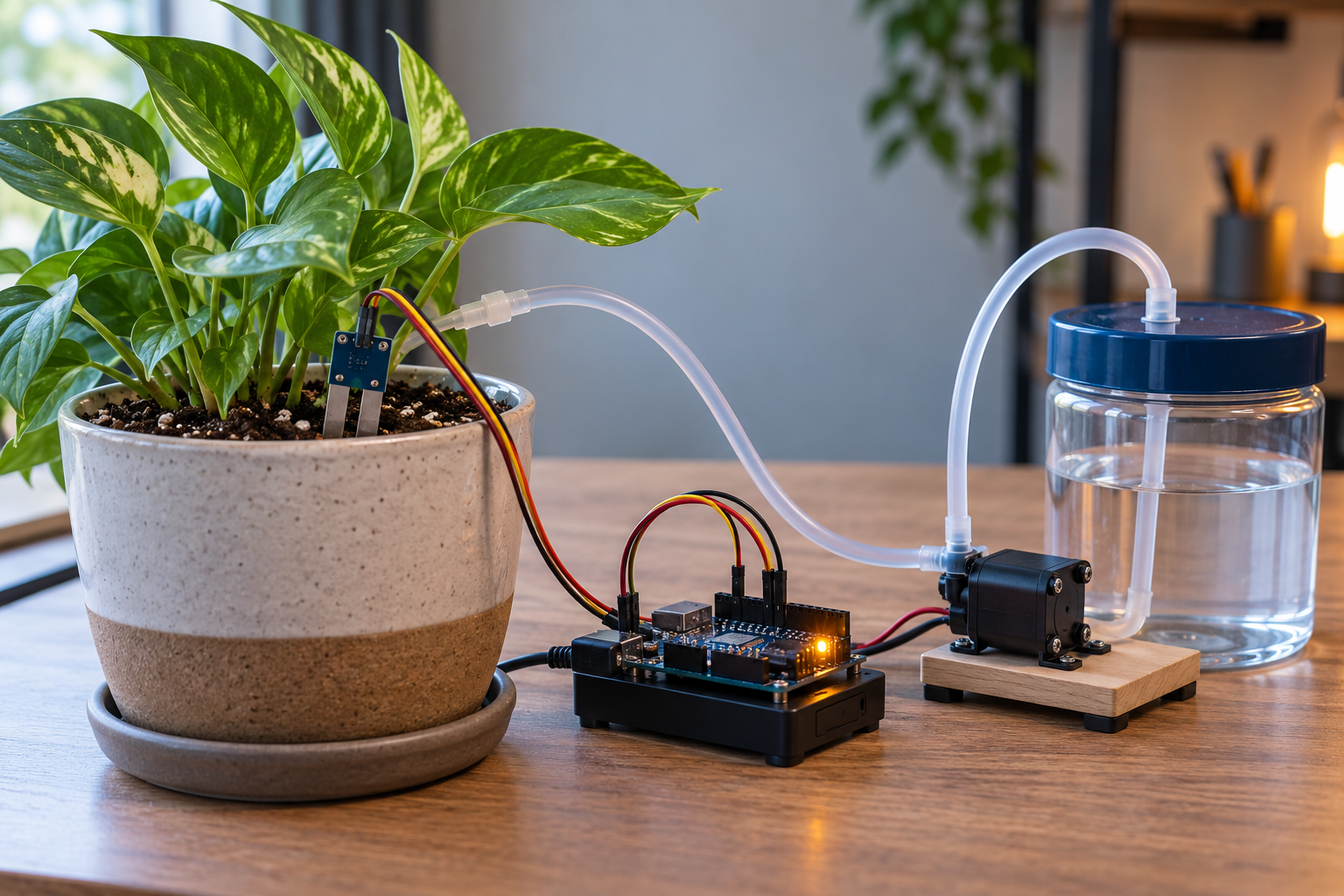
This mini smart irrigation system is a small prototype idea: use a sensor and a simple controller to make watering decisions based on conditions in the soil, rather than relying only on a fixed routine.
The details below describe a proposed direction. The final components, behavior, and results should be updated to match the prototype once it is built and tested.
How the mini version could work
A soil-moisture sensor could provide a reading to a microcontroller. The system could compare that reading with a chosen threshold and then indicate when watering may be needed or control a small pump. A manual override and clear status indicator could make testing easier.
Possible features to test
- Read and display soil-moisture measurements.
- Set a threshold for a watering alert or pump action.
- Include a manual control mode for safe testing.
- Record observations and compare sensor readings with the soil’s condition.
Why build a mini version?
A compact prototype makes it possible to test the sensing and control logic before considering a larger setup. It can demonstrate basic automation, help identify sensor limitations, and provide a practical learning example. Any water-saving benefit would need to be measured rather than assumed.
Build notes to come
I’ll document the sensor and controller choices, wiring, code, calibration, test conditions, and what changed between iterations. Photos and measurements will help show what the prototype actually does.
Prototype specifications and test results will be added after implementation.